Holland Lake Lodge Montana: History, Location, and Things to Do
Holland Lake Lodge sits on the shore of Holland Lake in Montana’s Swan Valley, below the peaks of the Swan Range. It opened on July 4, 1925, as the Mountain View Hotel, and for most of the century since it has been the gathering place for people heading to the lake and into the Bob Marshall Wilderness.
Holland Lake Lodge is about 75 miles from Missoula and roughly 2 hours from Glacier National Park’s west entrance. It sits on the shore of Holland Lake at about 4,050 feet, close to trails, the water and the Bob Marshall Wilderness.
The lodge changed hands in 2025, and what it can offer is still being settled with the Forest Service. Check current hours and services on the lodge’s website before you plan around its restaurant, rooms or rentals.
How to Get to Holland Lake Lodge
Planning a day on the water? Our complete Holland Lake guide covers the campground, swimming beach, boating and fishing.
Holland Lake Lodge is about 7 miles south of Condon, off Highway 83. Coming from Condon, drive south on Highway 83 and turn east (left) onto Holland Lake Road (Forest Road 44) near mile marker 35. Follow it 3.5 miles to the intersection with Owl Creek Loop Road and keep left on Holland Lake Road. The road starts out paved, then turns to dirt. Pass the campground entrance; the road to the lodge is on your right, before the trailhead parking at the end of the road.
From Missoula, take Highway 200 east to Clearwater Junction, then Highway 83 north through Seeley Lake. It’s about 75 miles, roughly 1 hour 40 minutes.
From Kalispell, head to Bigfork, then take Highway 83 south past Swan Lake. It’s about 75 miles, a little over 1.5 hours.
Highway 83 is open year-round, though winter driving can call for good tires, chains or four-wheel drive. Holland Lake Road may be gated from late October through April, so check access before a winter visit.
Services are spread out in the Swan Valley, so fill up before you come. Cell service at Holland Lake is extremely limited to nonexistent; download maps and directions before you leave town.

History of Holland Lake Lodge
The lodge began with a plan by Roria “Babe” Wilhelm, his sister Ada, and her husband David “Art” White to build a resort on Holland Lake. They applied to the Forest Service for a special use permit in 1924, and a January 1925 newspaper report noted its approval. The lodge still sits on Forest Service land and operates under a permit today.
They named it the Mountain View Hotel and built it with lumber from Babe’s steam-powered sawmill. It opened on July 4, 1925. The Whites ran the hotel while the Wilhelms handled packing and guiding, with trail rides, fishing and hunting trips into the mountains. The hotel later became known as Holland Lake Lodge.
On July 2, 1947, the newly renovated lodge burned to the ground. A new log lodge went up that same year and was finished in 1948. Read the full story in the Seeley Swan Pathfinder’s brief history of Holland Lake Lodge.
The lodge passed through many owners. Paul Judge of Missoula bought it in 1930 and returned it to the Whites in 1932. Later owners included Louis Jensen, C.J. and Donella McCann, and Charles and Lillian Peters. In 1979, Howard Uhl and Dick Schaeffer became the first owners to run it year-round. Robert Nagell and John Wohlfeil bought it in 1997, and Christian Wohlfeil took it over in 2002.
In 2022, Utah-based developer POWDR reached an agreement with the owner to expand the resort. The plan would have removed 10 structures, added a 28-room building and raised capacity from 50 to 156 guests. Many locals, organized as Save Holland Lake, opposed it. In late 2022, the Flathead National Forest rejected the proposal because it went beyond the lodge’s 10.53-acre permit area.
The lodge went back on the market in 2023. In October 2024, Eric Jacobsen and Thomas Knowles signed a purchase agreement and said they would not expand beyond the existing footprint. In July 2025, the Flathead National Forest issued Jacobsen a 20-year special use permit and a 2025 operating plan, which does not allow new buildings or activities.
What Holland Lake Lodge Offered Historically
For most of its history, Holland Lake Lodge offered overnight stays in the main lodge and in cabins on the grounds.
Its restaurant and bar served overnight guests and day visitors, with views across Holland Lake.
Watercraft and Equipment Rentals
Paddleboards, kayaks and canoes have been available to rent at Holland Lake, so visitors without their own boats can explore the lake’s 416 acres.
Recreation.gov lists rental rates of $10 per hour, $25 for 4 hours and $40 for 8 hours. Check availability before you go, since rentals depend on who is operating that season.

Things to Do Near Holland Lake Lodge
Holland Lake is a base for outdoor trips in the Swan Valley and the Swan Range above it: swimming, paddling, fishing, hiking and backcountry travel.
The Bob Marshall Wilderness Complex borders the area to the east, offering extensive backcountry hiking and horseback opportunities. The Holland Lake area serves as one of the primary western access points to this wilderness system.
Wildlife here includes grizzly and black bears, moose, elk, white-tailed deer, bald eagles and osprey. This is grizzly country, so carry bear spray.
Hiking Near Holland Lake Lodge
The Holland Falls National Recreation Trail is the most popular hike in the area. It’s an easy 1.6-mile walk each way (3.1 miles round trip) that follows the lake’s north shore and climbs about 750 feet to Holland Falls. Expect company on summer weekends.
Read our Holland Lake Falls Trail guide
Past the falls, the trail keeps climbing to Upper Holland Lake, about 8 miles one way with roughly 2,000 feet of gain, and on toward the Bob Marshall Wilderness. See our Upper Holland Lake Trail guide.
Strong hikers can continue from Upper Holland Lake to Sapphire Lake and loop back on the Holland Lookout Trail (#42), about 14.6 miles in all.
The Holland-Gordon Trail (#35) starts at the Owl Creek Packer Trailhead and follows the south side of Holland Lake. Outfitters and horse packers use it heavily, so step off the trail and let stock pass.
For a shorter outing, walk the first part of the Holland Falls trail. It follows the north shore with lake views before the climb begins.
Fishing at Holland Lake
Holland Lake holds kokanee salmon and trout, including rainbow and westslope cutthroat, along with mountain whitefish and yellow perch. Bull trout live here too and are protected: catch and release only. Montana FWP’s lake survey puts the maximum depth at 156 feet (59 feet on average), so drop-offs and creek inlets are worth working.
Shore access is limited in places, and a boat or paddle craft reaches the deeper water and drop-offs.
Fly fishing techniques work well during insect hatches, particularly in spring and fall. Spinning gear with small lures or bait remains effective throughout the season. Montana fishing regulations apply, requiring appropriate licenses and adherence to catch limits.
Water Recreation
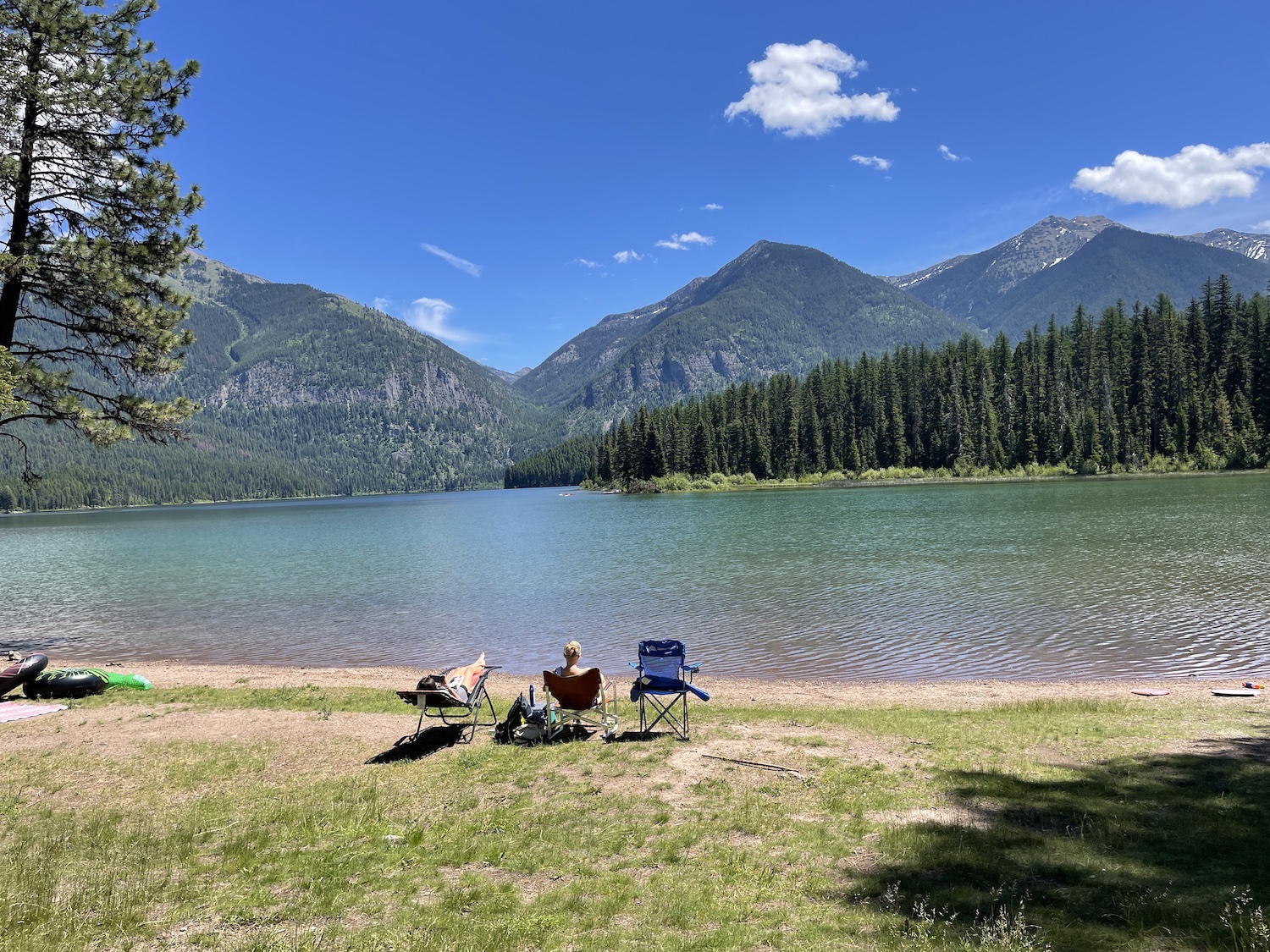
Holland Lake’s clear, cold water draws swimmers in summer. The day use area has a gravel beach with a gradual entry, and the water typically runs 60 to 70°F in July and August, colder early and late in the season. There are no lifeguards.
Stand-up paddleboarding and kayaking provide alternative ways to explore the lake. The relatively calm waters suit beginning paddlers, though afternoon winds can create challenging conditions.
Where to Stay Near Holland Lake Lodge
Lodging options in Swan Valley include vacation rentals, Forest Service campgrounds, and limited commercial accommodations. The area’s dispersed lodging infrastructure reflects its character as a less-developed alternative to busier Montana tourist corridors.
Condon, about 7 miles north, has the Mission Mountain Mercantile for groceries and supplies, and the Hungry Bear Restaurant. Seeley Lake, about 20 miles south, has more lodging, dining and shopping.
If you’d like a private vacation rental nearby, our condo at Swan River Lodge in Condon sleeps up to 3 and sits on 10 private acres backing onto the Swan River, about a 15-minute walk from Cold Creek Bridge. Holland Lake is about 15 miles away, roughly a 25-minute drive. Book direct and skip Airbnb’s cleaning and service fees (about $60 less on a 3-night stay).
Holland Lake Campground, next to the day use area, has 38 sites: 24 can be reserved on Recreation.gov up to six months ahead, and 14 are first-come, first-served. It has vault toilets and drinking water. Book early for summer.
Additional campgrounds in the Swan Valley corridor include Seeley Lake-area facilities and dispersed camping opportunities on national forest lands. Dispersed camping requires adherence to Leave No Trace principles and awareness of seasonal fire restrictions.
Holland Lake Lodge in the News
Holland Lake Lodge made statewide news starting in 2022, when an expansion plan put the lodge’s future in front of the public.
The Bigfork Eagle (April 2025) summarized the story: POWDR’s plan, the Forest Service rejection in late 2022, the 2023 listing, and the new buyers’ request for a permit.
NBC Montana (July 2025) reported the 20-year permit and noted that the range of services the lodge may offer still depends on a new wastewater system and an environmental review.
For the long view, the Seeley Swan Pathfinder’s brief history traces the lodge from the Mountain View Hotel to today.
The lodge has historically operated from June to October. If your plans depend on it, check the current season and services before you go.
Planning Your Visit to Holland Lake
The Holland Lake area is accessible year-round, though seasonal conditions significantly affect activity options and access logistics.
Best Time to Visit
Summer months (June through September) provide the most reliable weather and full access to trails and water activities. July and August bring the warmest temperatures, with daytime highs typically ranging from 70-85 degrees Fahrenheit. These peak months also bring the highest visitor numbers, particularly on weekends.
Spring (May through early June) offers good hiking conditions but limited water recreation due to cold temperatures. Snowmelt swells Holland Creek, creating impressive waterfall flows. Trails may retain snow at higher elevations through mid-June.
Fall (September through October) brings reduced crowds and excellent conditions for hiking. Fall colors peak in late September through early October. Water levels drop, potentially affecting boat launching. Temperatures cool significantly, with frost possible by mid-September.
Winter transforms the area into a snow recreation destination. Cross-country skiing and snowshoeing replace summer activities. Highway 83 remains open but requires winter driving preparation. Daylight hours shorten significantly from November through February.
Weather Considerations
Mountain weather changes rapidly in the Mission Mountains. Summer thunderstorms develop frequently in afternoons, particularly July and August. Carry rain gear and plan high-elevation activities for morning hours when weather is typically more stable.
Winter temperatures regularly drop below zero Fahrenheit. Wind chill factors increase exposure risk. Avalanche danger exists in the surrounding mountains from December through April. Check local avalanche forecasts before winter backcountry travel.
Spring weather remains highly variable. Temperatures can swing from freezing to 60 degrees within a single day. Precipitation falls as rain or snow depending on elevation and temperature.
What to Bring
All visitors should carry the Ten Essentials for backcountry travel: navigation tools, sun protection, insulation, illumination, first aid supplies, fire starting equipment, repair kit, nutrition, hydration, and emergency shelter.
Bear spray is recommended for all hiking activities. Both black bears and grizzly bears inhabit the Swan Valley. Proper food storage prevents wildlife conflicts. Hard-sided containers or bear-resistant canisters are required for overnight camping in designated areas.
Fishing requires a Montana fishing license, available online or at retail outlets in Seeley Lake and other regional communities. Non-residents must purchase appropriate licenses before fishing.
Water purification equipment is necessary for backcountry hiking. Holland Creek and lake water should be filtered or treated before drinking.
Layers work better than single heavy garments. Morning temperatures may sit in the 40s while afternoon temperatures reach 80s. Synthetic or wool materials perform better than cotton in wet or cold conditions.
Leave No Trace Principles
The Holland Lake area receives heavy recreational use. Minimizing impact helps preserve the area’s natural character and reduces environmental degradation.
Pack out all trash including food waste and toilet paper. Facilities are limited on trails beyond the trailhead area.
Camp in established sites when possible. Avoid creating new campsites or expanding existing sites. Keep camps at least 200 feet from water sources.
Human waste should be buried 6-8 inches deep and at least 200 feet from water sources and trails. Pack out toilet paper or bury it deeply with waste.
Campfires should be built only in established fire rings when permitted. Check current fire restrictions before planning fires. Use existing dead and down wood rather than cutting standing trees. Fully extinguish fires before leaving camp.
Respect wildlife by observing from distance. Never feed animals. Store food properly to prevent habituation and conflicts.
Stay on established trails to prevent erosion and vegetation damage. Cutting switchbacks accelerates trail degradation.
Getting Around Swan Valley
Highway 83 runs about 73 miles through the Swan Valley from Seeley Lake north to Bigfork, and services are spread far apart.
Personal vehicles provide the primary transportation method. No public transportation serves the area. Bicycle touring is possible but requires preparation for long distances between services and significant wildlife awareness.
Condon is the nearest community to Holland Lake. The Mission Mountain Mercantile there carries groceries and basic supplies.
The Hungry Bear Restaurant in Condon serves meals, with days and hours that change by season. Check before you go.
Fuel is limited in the valley. Seeley Lake (about 20 miles south) and Bigfork (about 55 miles north) have full services.
For maps and current trail conditions, contact the Flathead National Forest’s Swan Lake Ranger District.